Wednesday, December 29, 2010

90GB of data stored in 1g of bacteria


"Researchers from the Chinese University of Hong Kong have succeeded in demonstrating data storage and encryption with bacteria.

While current electronic data storage methods approach their limits in density, the team achieved unprecedented results with a colony of E.coli. Their technique allows the equivalent of the United States Declaration of Independence to be stored in the DNA of eighteen bacterial cells. Given there are approximately ten million cells in one gram of biological material, the potential for data storage is huge. Furthermore, data can be encrypted using the natural process of site specific genetic recombination: information is scrambled by recombinase genes, whose actions are controlled by a transcription factor.

However, the technique is not yet perfect. Retrieval of data requires a sequencer, and is therefore tedious and expensive. Additionally, toxic DNA is bound to be present within the stored sequences. It is feared that organisms will mutate to remove such sequences, thereby deleting some of the data.

Consequently, the application of this technology is currently restricted to storing copyright information in genetically engineered organisms. Nevertheless, these results are encouraging. A bacterial medium has the potential to be more resilient than electronic methods of data storage. For example, the bacterium Deinococcus radiodurans is extremely radioresistant; the entrusted information would survive even under the electromagnetic pulse and radiation of nuclear fallout."

- http://www.bluesci.org/

(A very interesting development in biotechnology. Also, one of the main problems with data storage is it can be damaged quite easily or simply becomes corrupted over time. As it says above this method has the potential to be far more resilient and therefore data can be preserved for much longer periods of time than previously possible)

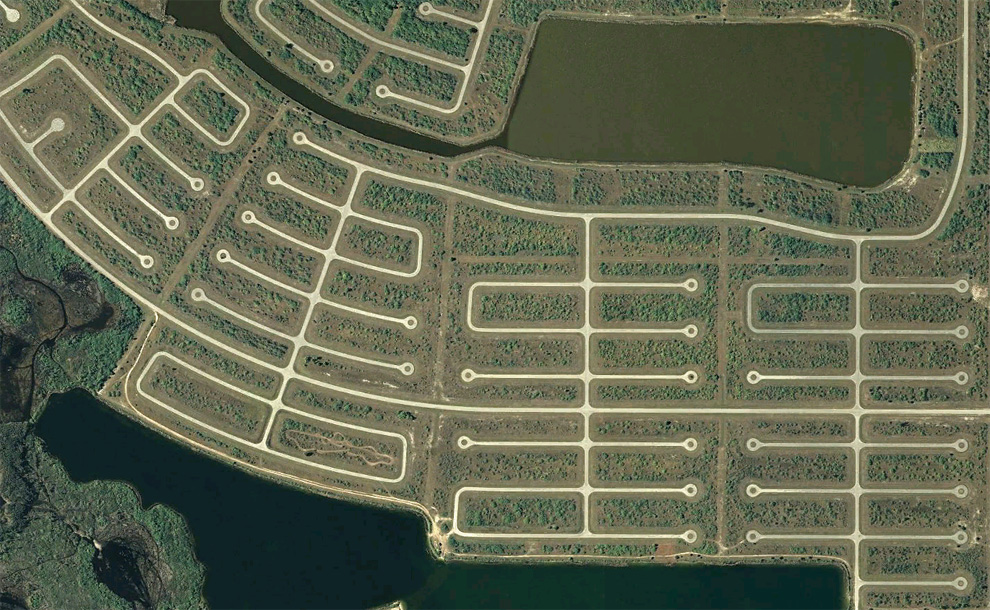
Manmade Landscapes

- Empty cul-de-sacs fill an area south of Rotonda West in Charlotte County, Florida.


- Oil fields in Saudi Arabia. Pictures from Google Earth.


Visited: R&S Boiler Room Session @ Pattern Cutters Warehouse

Pretty good.


Sunday, December 26, 2010

A Collection a Day


Everyone should collect something. But maybe a new collection for every day is a bit excessive?! - http://collectionaday2010.blogspot.com/


Digital Anthropology at UCL

http://www.ucl. ac.uk/anthropology/digital-anthropology/

The new MSc in Digital Anthropology- -begun in the Autumn of 2009–is well positioned for becoming a world leader in the training of researchers in the social and cultural dimensions of information technologies and digital media.

Digital technologies have become ubiquitous. From Facebook, Youtube and Flickr to PowerPoint, Google Earth and Second Life. Museum displays migrate to the internet, family communication in the Diaspora is dominated by new media, artists work with digital films and images.

Anthropology and ethnographic research is fundamental to understanding the local consequences of these innovations, and to create theories that help us acknowledge, understand and engage with them. Today’s students need to become proficient with digital technologies as research and communication tools. Through combining technical skills with appreciation of social effects, students will be trained for further research and involvement in this emergent world.

This MSc (…) brings together three key components in the study of digital culture:

1. Skills training in digital technologies, including our own Digital Lab, from internet and digital film editing to e-curation and digital ethnography.
2. Anthropological theories of virtualism, materiality/ immateriality and digitisation.
3. Understanding the consequences of digital culture through the ethnographic study of its social and regional impact and issues of the digital divide.


Started in 2009 but I've only just read about it. Sounds quite interesting and opportune. I'd be curious to know how the course is going.


Saturday, December 25, 2010

Tangible Music


Quite a nice project. Also featured in IDEO's "I miss my pencil" book. A very similar idea to Matt Brown's RFID Radio.

Friday, December 24, 2010

tight


Thursday, December 23, 2010

Water Sculpture


Art work by Shinichi Maruyama
Composited by Tetsushi Wakasugi

Tuesday, December 21, 2010

Ishihara


Yoav Brill has quite extreme colour blindness. He spent his chilldhood being unable to distinguish pink from gray, or even pick out a white flower in a sea of red ones. Brill made this film about his experience called Ishihara -- named after the instantly recognizable test patterns of colored dots that doctors use to diagnose colorblindness.

Saturday, December 18, 2010

Supposed to be researching Physiognomy...

Ended up reading -

How much do I want to know about my genes?

Large-scale studies such as the Avon Longitudinal Study of Parents and Children are playing a fundamental role in helping scientists to identify distinctions between the effects of genes and environment on our bodies and minds. Not only will this point the way to new treatments for disease, it will also illuminate the critical factors that determine who we are.

However, taking part in such studies exploring genetic risk factors for disease could have profound effects on our lives and identities. If the study identified that we had a high risk of a disease, such as breast cancer, but that there was no certainty we would actually get it, for example, would we want to know about the risk?

Would we want to live with the fear of something that may not happen? Would we take drastic preventative action, such as having both our breasts removed, to pre-empt the cancer occurring, even though such operations cannot remove all the tissue that is likely to become cancerous? What about the effects of such 'knowledge' on our sense of safety, our social relationships and life decisions such as whether to marry and have children?

http://www.wellcomecollection.org/whats-on/the-identity-project/more-identity-in-depth/how-much-do-i-want-to-know.aspx

Friday, December 10, 2010

Cold War-era building frozen in time.


The Palast der Republik, or Palace of the Republic, was new in 1976, but largely unloved after the Berlin Wall fell in 1989. Thorsten Klapsch became the last photographer to capture its interiors before a long period of demolition began. He has now published a book of his photographs.


Thursday, December 9, 2010

Audio / Visual. Amazing


Sculpture is an audiovisual performance duo from London – electronic music producer, Dan Hayhurst, and animator, Reuben Sutherland.
Sutherland ‘DJs’ with home-made zoetropic discs, intricate concentric rings of illustrated frames, projecting fragments of looping images at 33, 45 and 78 rpm – pre-Edisonian imaging technology combined with a digital video camera.
Rotary Signal Emitter - Side B from The Wire Magazine on Vimeo.
More info:
http://www.tapebox.co.uk/Tapebox/Home.html

NEWS - I have a bedroom! (No door yet though)

In fact all 6 bedrooms have now been built in Unit 6. Just a bit more painting and doors to attach. Our house is really starting to become a home!

The timber frame

With inner plaster board wall attached

Painting a finished room

The room, complete with belongings!

Games, games, games.

In the past few months I have become quite interested in and have been reading a lot about issues relating to gaming, how it's developing and how it's affecting our culture at the moment.
How gaming is being utilised as a tool to solve serious issues and problems and be of benefit to society but how in turn, with its increased involvement in our lives, it has also caused adverse behavior in some people.

Below is a link to BBC Panorama 'Addicted to Gaming".

At first I thought the panorama program was being a bit over the top and extremist but after seeing the interviews with people it seems that in some cases people are displaying all the traits of having an addiction - sometimes playing for more than 12 hours a day, neglecting important responsibilities, even failing to care for pets and children.

-----------------------------------------------------------------------------------------------------

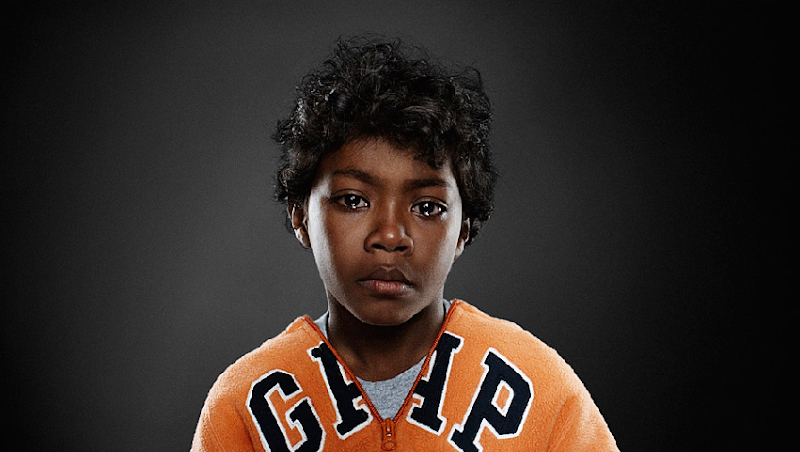
In this photography project called Immersion by Robbie Cooper he takes pictures of people's faces while they are playing computer games. You can see by the emotions displayed on their faces how involved they get with playing the games.


The boy in the photo above cries while he is playing video games because he doesn't blink while playing, so not to miss anything.


Wednesday, December 1, 2010

More on Serious Gaming


Jane McGonigal’s TED talk on Serious Games.

(This video was the inspiration for the Serious Games Hot Topic event held by NESTA, which I have written about previously on this blog. I have also recently been reading 'Fans, Bloggers and Gamers - Exploring Participatory Culture' a book by Henry Jenkins which links well to this TED video. Both McGonigal and Jenkins talk a lot about utilising collective intelligence, via the internet, for solving bigger real world issues which I'm finding very interesting at the moment).

What if...


Tuesday, November 30, 2010

Colour A Sound


I'm already obsessed with those wind up music boxes...

'Color a Sound is a sound installation by Blair Neal, that invites participants to color on a transparency and hear a corresponding sound. Sound is triggered when it passes a line, observed by MaxMSP software running in the background. Different colors control the octave of a note, blue – low, green – middle and red – high. Modes can also be changed so that blue colours trigger 808 drum sounds instead of chimes.'

Heart Chamber Orchestra


The Heart Chamber Orchestra – HCO - is an audiovisual performance. The orchestra consists of 12 classical musicians and the artist duo TERMINALBEACH. Using their heartbeats, the musicians control a computer composition and visualization environment. The musical score is generated in real time by the heartbeats of the musicians. They read and play this score from a computer screen placed in front of them. Custom-made software analyzes the data and via different algorithms it generates the real-time musical score for the musicians, the electronic sounds and the computer graphic visualization via 2 projectors in the space.


Sunday, November 28, 2010

Dead Drops


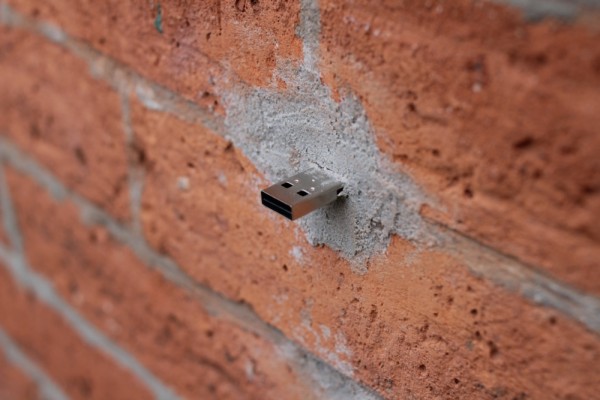
‘Dead Drops’ is an anonymous, offline, peer to peer file-sharing network in public space. USB flash drives are embedded into walls, buildings and curbs accessable to anybody in public space. Everyone is invited to drop or find files on a dead drop. Plug your laptop to a wall, house or pole to share your favorite files and data. Each dead drop is installed empty except a readme.txt file explaining the project. ‘Dead Drops’ is open to participation. If you want to install a dead drop in your city/neighborhood follow the ‘how to’ instructions and submit the location and pictures.

Berlin based media artist, Aram Bartholl started the ‘Dead Drops’ project during his stay in NYC at EYEBEAM as an artist in residence, October 2010.

http://deaddrops.com/


Black and WTF

Date unknown

Beauty device to shape the nose - $6.00.

From Black and WTF

One Hundred and Eight


One Hundred and Eight is an interactive installation made by Nils Völker. It’s made out of ordinary garbage bags which can be selectively inflated and deflated by two cooling fans.

Maria Blaisse - kuma guna 1996, foam costumes for dance


Kuma Kuna, a project initiated by Maria Blaisse for which she developped a specific elastic foam to make a study form in movement. In this project she developed a series of costums with a focus on the stubborn qualities of the material. The costums are trying to find their counterbalance of the strenght of the human body. In movement the wearer is influencing the form of the costumn, and visa versa, together forming a fascinating language.


Friday, November 26, 2010

??

"Failure to renew your domain name by the expiration date may result in a loss of your online identity" !!

(time to renew my website it seems!)

High Dynamic Photography


Looks unreal! Produced by merging multiple photographs. So much contrast and detail in the tones makes it look fake.

Wednesday, November 24, 2010

Bad Things Could Happen


Good fun. Made by some Kingston kids called the This Is It Collective. Their website is here.


Tuesday, November 23, 2010

Richard Harvey


More of his work here.

Making Future Magic: iPad light painting - Berg


"This film explores playful uses for the increasingly ubiquitous ‘glowing rectangles’ that inhabit the world.
We use photographic and animation techniques that were developed to draw moving 3-dimensional typography and objects with an iPad. In dark environments, we play movies on the surface of the iPad that extrude 3-d light forms as they move through the exposure. Multiple exposures with slightly different movies make up the stop-frame animation."

Amazing project by Berg

Thursday, November 18, 2010

Areas of outstanding urban beauty


Britain's most beautiful car park

The winner of CABE’s photo competition to find Areas of Outstanding Urban Beauty is The Galleries car park by Christopher Hoare.

The photo competition is part of People and places, a project about involving people in shaping the look and feel of the places where they live. See all of the entries on flickr.

Monday, November 15, 2010

Playing Tetris Reduces Flashbacks From Traumatic Experiences

The computer game Tetris may have a special ability to reduce flashbacks after viewing traumatic images, according to scientists at the University of Oxford.

Full article by the Welcome Trust here.


Monday, November 8, 2010

The Apology Line


Director: James Lees
The most talked-about short documentary of the year: the 'apology line' is where members of the public can anonymously confess to absolutely anything, over the phone. Based on the original apology line project in New York, the apologies are uncomfortably honest, sometimes funny, occasionally shocking, but always fascinating.

http://www.myspace.com/apologyline

Visited: Eric Whitacre @ Barbican Centre

I've seen lots of exhibitions at the Barbican Centre but I've been wanting to see a concert there for ages. Two weeks ago I decided to go see the London Symphony Orchestra and Chorus conducted by Eric Whitacre perform some of his music along with some pieces by other American composers including Barber and Lauridsen. Part of the reason for also wanting to see this concert is I'm currently learning some pieces by Whitacre with the choir that I sing in and I'm also interested in his 'Virtual Choir' project which I have previously written about on this blog here.

It was a very enjoyable concert but at times I felt the choir did not come through enough and the balance between the choir and orchestra could have been better at times. Watch the video below to get an idea of Whitacre's compositions (The piece I am currently learning).


Sunday, November 7, 2010

NEWS - Secret Cinema presents Lawrence of Arabia

Last month I worked as part of the art department for Secret Cinema's production of Lawrence of Arabia, that took place at Alexandra Palace. We worked to create the atmosphere and all round experience of Lawrence of Arabia within the location. In particular, I helped to construct the sets, interior decorations and prop making. Audience members arrived at Alexandra Palace dressed for the occasion, some still unaware of what film they were about to watch. Actors in full costume, some complete with horses and camels, helped to immerse the visitors into the event in preparation for watching the film. (Watch the video for highlights).


It was a really cool project to be involved with, especially as it was the first large scale event / project I have worked on. The rest of the team were also really nice people to work with.

Working on this project also tied in nicely with some personal work that I am doing at the moment. I have been looking at how to add physicality to digital interactions through creating real world experiences, peoples physical reactions to digital stimuli and creating social movements through online social networks. All of Secret Cinema's promotion, hype and communication with audience members happens through digital means. They have a very strong online presence and members of their community are asked to carry out certain tasks before they come to film screenings. For example they are asked to dress up accordingly and bring props, but for this film they were also asked to group themselves into 'tribes' according to where they live in London, which in turn then created online and real world interactions. People displayed their 'tribe markings' on their social network profiles to link with other people who were in the same tribe as them. They were then encouraged to display their tribe markings when traveling to the film screening and group together once at the location. I was impressed by how involved the audience got with the whole experience, but this was probably largely due to all the effort Secret Cinema had put into not only creating the amazing environment at the Alexandra Palace but also the communication they had with the visitors in the lead up to the event. People also seemed really excited at the chance to act out of the normal and be part of this collective 'secret' immersive experience.

Saturday, November 6, 2010

Visited: Nosaj Thing @ Pattern Cutters Factory


Went to this gig a few weeks ago at the Pattern Cutters Factory, Dalston. Nosaj Thing's debut UK audio visual show. Pretty Amazing. Watch the video to get an idea of what it was like.


Friday, November 5, 2010

Sorry, I got distracted.


I really enjoyed this video of a talk by Steven Johnson called 'Where good ideas come from' especially because it kind of relates to my motivations for this blog. My blog is basically my incubator system for my small hunches I collect from the internet (see the video)! He also briefly talks about how DISTRACTIONS on the internet can lead to 'miraculous and marvelous new ways to connect...So many ways to reach out and find other people who have that missing piece, which will complete the idea we're working on. We're to stumble serendipitously across some amazing new piece of information that we can use to build and improve our own ideas'.
Definitely worth a watch.

Steven Johnson says "Go for a walk; cultivate hunches; write everything down; but keep your folders messy; embrace serendipity; make generative mistakes; take on multiple hobbies, frequent coffee houses and other liquid networks; follow the links; let others build on your ideas; borrow, recycle, reinvent." - From BBC News homepage 8th November 2010.

Wednesday, November 3, 2010

NEWS - Unit 6, Building has Begun

We have started to build the bedrooms in our house (Unit 6). The structures of 4 bedrooms are nearing completion. We still have 2 more rooms to build, there will be 6 altogether. More updates to follow.


Monday, November 1, 2010

NEWS - Making connections

Hopefully my blog is now connected to my Twitter Account - www.twitter.com/AminaNazari


Friday, October 29, 2010

Plastic Bag


Short film by American director Ramin Bahrani traces the epic, existential journey of a plastic bag (voiced by Werner Herzog) searching for its lost maker, the woman who took it home from the store and eventually discarded it.


Thursday, October 28, 2010

Dream recording device

"A US researcher has said he plans to electronically record and interpret dreams.

Writing in the journal Nature, researchers said they have developed a system capable of recording higher-level brain activity. "We would like to read people's dreams," says the lead scientist Dr Moran Cerf."

Read more - http://www.bbc.co.uk/news/science-environment-11635625

Wednesday, October 27, 2010

RSA Animate - Changing Education Paradigms


A friend posted a link for this video created by the RSA. Talks a lot about education and creativity and changes that need to be made to make schooling more effective and more appropriate for today. Also the animation is pretty cool.


Tuesday, October 26, 2010

Homemade Spacecraft


Today

Eric Baker - images for TODAY


Friday, October 22, 2010

Yellow Chair Stories


Yellow Chair Stories was a live service design intervention, where Anab opened her personal Wifi to her neighbours and passersby. This approach illustrated how wireless technologies could become interfaces to recreate transient spaces for conversations at the threshold of the public and the private, the physical and the electronic.
The project won a UNESCO Digital Arts Award 2005, and was presented at Ubicomp 2005, ISEA 2006, DesignEngaged 2005 and various other conferences. It has also been successfully replicated in different parts of the world. - from Superflux

An interesting project looking at how get to know your 'WiFi neighbours' in real life and encouraging interaction with people who perhaps pass your house everyday or live in your area. I like how she created a shared folder on the network so that this became an online space to share, leave or receive information from the other people who had sat in the yellow chair or who had used the open WiFi network.

Wednesday, October 20, 2010

Listening to:


Serious Games

NESTA recently ran a talk called 'Serious Games' which I've been reading about. Shame I missed it as I would've liked to have gone but read about it here and read the review by Creative Futures here.
OR watch the video of the talk here.


Tuesday, October 19, 2010

Kickstart

http://www.kickstarter.com/

Kickstarter is the largest funding platform for creative projects in the world. Every month, tens of thousands of amazing people pledge millions of dollars to projects from the worlds of music, film,art, technology, design, food, publishing and other creative fields.


Distracted but still related.

"We’re living in a new world – a place where our audiences see their own lives broadcast to friends across networks like Facebook and Twitter, and where jokes, arguments and love affairs are conducted through comments and responses, likes and retweets, friending and tagging. Broadcasters have probably been a bit slow to create formats fast enough and open-ended enough to reflect the way we live our lives now." – Matt Locke (Head of Crossplatform at Channel 4 / Really Interesting Group)

His blog here.


Friday, October 15, 2010

Phonoaesthetics


Thomas James Niblett’s extraordinary final year project has seen him awarded the Top Art, Design and Media Graduate prize at the British Graduate 100 Awards this month. The awards celebrate the most outstanding undergraduates and graduates in Britain.

Thomas James graduated from Chelsea’s BA Graphic Design Communication this summer. He explains the vision for his incredible work: “My final project at Chelsea allowed me to research and produce an interactive publication based on Phonoaesthetics, and the cross over between sound and image. The book was printed in conductive inks, and when touched allowed for varying circuits within the book to be completed and produce noise directly generated by the printed forms. A medium which reflected the books topic – the dialectic relationship between image and sound.”

More info on his website.


Labels

Blog Archive