Showing posts with label Reading. Show all posts

Wednesday, October 23, 2013

Recent Readings


so you want to invent your own currency...
http://www.aeonmagazine.com/living-together/so-you-want-to-invent-your-own-currency/


Belief systems
Faith and understanding


Friday, August 2, 2013

Protest By Way Of Marketing

http://www.dezeen.com/2013/07/27/opinion-sam-jacob-protest-through-media-and-marketing/

"I'd argue that the fact that there seems to be no single point is the point. The act and the subject of these protests have become delaminated. It's as though any subject can be attributed to any act, and the interchangeable relationship between the sign and signified makes it a postmodern form of protest. Doubly so, because the shifting arrangements of form and content take place within the media - in the representation of the act, not the act in and of itself. It's protest by way of marketing, PRotest, to coin a phrase. The worry is that by operating as a form of marketing, this kind of protest only serves to reinforce the mechanisms of contemporary society, only makes us more alienated, further from a position where we might be able to achieve anything.

Perhaps this kind of non-specific protest is a function of our own era. Maybe it's just harder to pinpoint what exactly is wrong because, quite frankly, everything is kind of wrong and there's nothing anyone can do about it." 

Thursday, July 25, 2013

Capitalist realism


continued from 'Monoculture'...

The term next appeared in 2009 with the publication of Mark Fisher's book, Capitalist Realism. Is There No Alternative?Fisher argues that the term "capitalist realism" best describes the current global political situation. His argument is a response to, and critique of, neo-liberalism and new forms of government which apply the logic of capitalism and the market to all aspects of governance.
As a philosophical concept capitalist realism is indebted to an Althusserian conception of ideology. Fisher proposes that within a capitalist framework there is no space to conceive of alternative forms of social structures. He proposes that the 2008 financial crisis compounded this position; rather than seeking alternates to the existing model we look for modifications within the system. The crash confirmed within the populace the necessity of capitalism rather than shake it loose from its foundations.
"Capitalist realism as I understand it cannot be confined to art or to the quasi-propagandistic way in which advertising functions. It is more like a pervasive atmosphere, conditioning not only the production of culture but also the regulation of work and education, and acting as a kind of invisible barrier constraining thought and action."[6]

Wednesday, May 29, 2013

DIVERSITY

Of thought
Of living
Of culture
Of rituals
Of actions
Of imagination
Of futures
Of realities


Monoculture: How One Story is Changing Everything


"A monoculture doesn’t mean that everyone believes exactly the same thing or acts in exactly the same way, but that we end up sharing key beliefs and assumptions that direct our lives. Because a monoculture is mostly left unarticulated until it has been displaced years later, we learn its boundaries by trial and error. We somehow come to know how the master story goes, though no one tells us exactly what the story is or what its rules are. We develop a strong sense of what’s expected of us at work, in our families and communities — even if we sometimes choose not to meet those expectations. We usually don’t ask ourselves where those expectations came from in the first place. They just exist — or they do until we find ourselves wishing things were different somehow, though we can’t say exactly what we would change, or how.” ~ F. S. Michaels"

"The independent life begins with discovering what it means to live alongside the monoculture, given your particular circumstances, in your particular life and time, which will not be duplicated for anyone else. Out of your own struggle to live an independent life, a parallel structure may eventually be birthed. But the development and visibility of that parallel structure is not the goal — the goal is to live many stories, within a wider spectrum of human values.” ~ F. S. Michaels


“Legislators don’t appreciate that if players introduce novelties into their games, they’ll become different people. Being different, they’ll demand a different kind of life; and that will make them want new institutions and laws. In fact, it’s no exaggeration to say that the game inventor is biggest menace that can ever afflict a state.” – Plato


Monday, April 22, 2013

Stop looking after No. 1


When Britain stops blaming itself, it can overthrow the existing order

A depressed, introverted 'look after No 1' mentality has ruled for 30 years. But a poll shows we may be ready for radical change

Sunday, April 14, 2013

J.B. Ballard

In many respects this fusion of past and present experiences, and of such disparate elements as the modern office buildings of central London and an alligator in a Chinese zoo, resembles the mechanisms by which dreams are constructed, and perhaps the great value of fantasy as a literary form is its ability to bring together apparently unconnected and dissimilar ideas. To a large extent all fantasy serves this purpose, but I believe that speculative fantasy, as I prefer to call the more serious fringe of science fiction, is an especially potent method of using one's imagination to construct a paradoxical universe where dream and reality become fused together, each retaining its own distinctive quality and yet in some way assuming the role of its opposite, and where by an undeniable logic black simultaneously becomes white.

Without in any way suggesting that the act of writing is a form of creative self-analysis, I feel that the writer of fantasy has a marked tendency to select images and ideas which directly reflect the internal landscapes of his mind, and the reader of fantasy must interpret them on this level, distinguishing between the manifest content, which may seem obscure, meaningless or nightmarish, and the latent content, the private vocabulary of symbols drawn by the narrative from the writer's mind. The dream worlds, synthetic landscapes and plasticity of visual forms invented by the writer of fantasy are external equivalents of the inner world of the psyche, and because these symbols take their impetus from the most formative and confused periods of our lives they are often time-sculptures of terrifying ambiguity.

Saturday, April 13, 2013

Saturday, February 16, 2013

99p Futures

"Last night, for one night only, a handful of 99¢ products of the future were stocked and sold alongside those of the past (toothpicks, curlers, candles) and the present (iPhone cases, One Direction party plates) at the utterly delightful Siri Pharmacy and 99¢ Store on Flatbush Avenue in Brooklyn.
Camouflaged amidst racks of Love Potion sensual oil, Cake Magic icing syringes, and Telstar extension cords, the Pro-Robot Replacement Heads, Filter Translators, and Home Transplant Kits of the foreseeable future seemed perfectly at home, but were selling fast, to the great amusement of the store’s owner. “No returns,” he warned me, as I purchased a “Void Refill” ($1.08 with tax), whose back matter promises that, used correctly, this “high-quality, all-natural material helps keep concepts ephemeral” and “can be used to refresh the hollow present.”
Congratulations to Elliot Montgomeryand Chris Woebken for creating such a fantastic way to make and engage with stories about the future. Now, to encourage a guerrilla movement: future-bombing Family Dollar and 99¢ Only stores nationwide with distributed Extrapolation Factory products… As Bruce Sterling writes in Wired, “You have to think that’s the way forward, given, of course, that arrests and lawsuits don’t ensue.”"


Thursday, February 14, 2013

Symbolic interactionism

Symbolic Interactionism is a social theory that focuses on the analysis of the patterns of communication, interpretation and adjustment between individuals. The theory is a framework for understanding how individuals interact with each other and within society through the meanings ofsymbols. Both the verbal and nonverbal responses that a listener then delivers are similarly constructed in expectation of how the original speaker will react. The ongoing process of Symbolic Interaction is like the game of charades; only it is a full-fledged conversation.[1]  

Most symbolic interactionists believe a physical reality does indeed exist by an individual's social definitions, and that social definitions do develop in part or relation to something “real.” People thus do not respond to this reality directly, but rather to the social understanding of reality. Humans therefore exist in three realities: a physical objective reality, a social reality, and a unique reality.
Both individuals and society cannot be separated far from each other for two reasons. One, being that they are both created through social interaction, and two, one cannot be understood in terms without the other. Behavior is not defined by forces from the environment such as drives, or instincts, but rather by a reflective, socially understood meaning of both the internal and external incentives that are currently presented (Meltzer et al., 1975).[6]

Monday, February 11, 2013

Adam Curtis...Again

"I mean, I live in Holborn and every day I go to the BBC I see these waves of people going into offices and I know they’re going to spend their time in front of their computers being told, “If you like this then you’ll like that,” and being managed by all these systems. No one’s really found a way of describing that world to those people. And that’s what journalism should be doing. It really should."

"Well, you could pull back as if in a helicopter and look at them and go, “Look, they’re like that.” People sort of did the same with science, so you can pull back and still see it in a social context. But now it’s almost like we’re inside the machine and we can’t pull out and see it. I think news is really stuck."

http://www.vice.com/en_uk/read/looking-beneath-the-waves-v10n12

Sunday, January 27, 2013

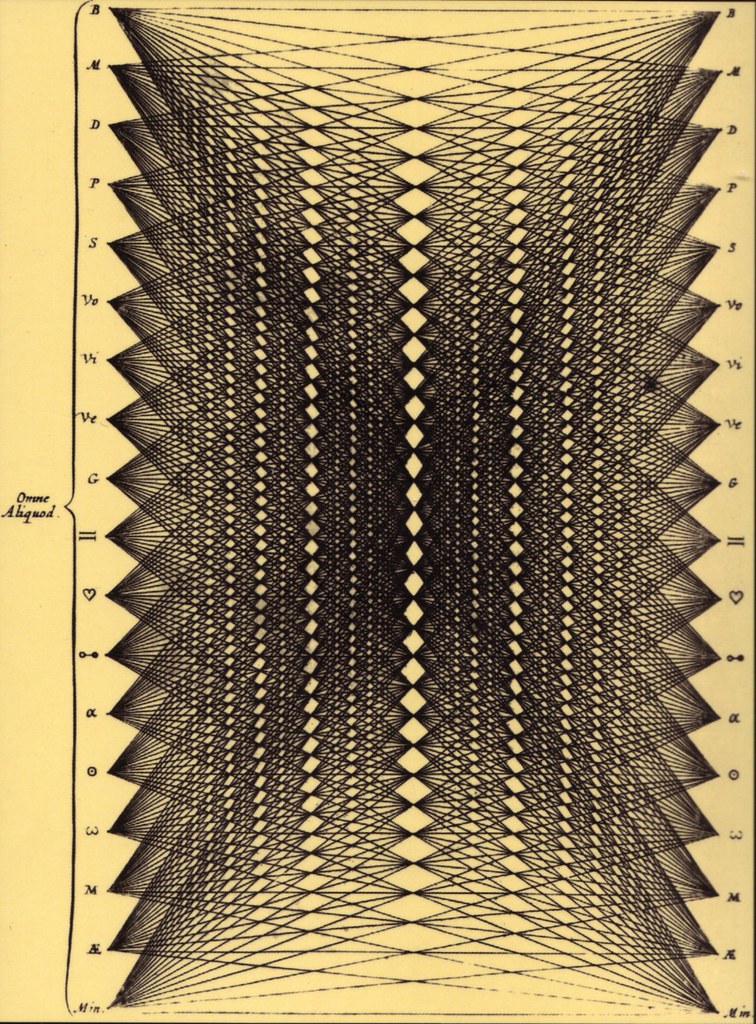
Athanasius Kircher

Device for listening to conversation in a piazza


Friday, January 25, 2013

Your body isn't a temple, it's a data factory emitting digital exhaust

The digital economy has often been called a new industrial revolution. And while factories dominated the first industrial revolution, today's factory is the human body. Instead of looking at people as "consumers" companies are beginning to think of them as "producers" emitting a steady stream of digital exhaust; indeed, the report's authors propose that the data tax would work like a pollution tax. Some brands have even used the idea of the body as a factory – or in Nike's case a "sweatshop"– in their marketing activity. In a campaign called Bid Your Sweat, the sports brand created an online auction in which the only currency accepted was the distances you'd run. Every kilometre logged on the Nike+ system was converted into currency you could buy Nike swag with.

The body as an "input/output device" is just one example of how digital technology is creating a new sort of biological discourse. We have begun to talk about ourselves in numerical, technological terms: the quantified self, life-tracking, life-hacking, etc. It's a vocabulary even embraced by new-age types who you think would be more interested in their chakras than their computers. Deepak Chopra, for example, promoted his involvement at CES with a tweet stating: "Our biology is a nano-technology workshop in our awareness." Yeah, I don't know what that means either, except that it's probably a nano-syntactic example of absolute bollocks.

http://www.guardian.co.uk/commentisfree/2013/jan/25/body-data-factory-digital-exhaust-data-tax

Thursday, January 10, 2013

Looney Gas and Lead Poisoning: A Short, Sad History

http://www.wired.com/wiredscience/2013/01/looney-gas-and-lead-poisoning-a-short-sad-history/


Seeing Double

http://www.guardian.co.uk/artanddesign/architecture-design-blog/2013/jan/07/china-copycat-architecture-seeing-double

"

Seeing double: what China's copycat culture means for architecture

An alpine town, the Eiffel Tower, the whole Manhattan skyline … China is replicating the world's architectural gems. But now Zaha Hadid would like it to stop"

Monday, December 24, 2012

Thursday, December 20, 2012

Ryan Gander

Yes -


Your life in three acts, 2005. Off-set printed pads and a cardboard box, 
45cm x 30 cm x 60 cm. Photo: Ryan Gander. Courtesy of the artist and STORE, London and Annet Gelink Gallery, Amsterdam

A reconstruction of a map of Sheffield City Centre - usually made freely available by the tourist information office - reproduced here to include twenty-six streets existing pre 1911, most of which mark locations where town planners have replaced the city’s organic structure with a formulaic interpretation of ‘civic economy’.


Tuesday, December 18, 2012

MONIAC


The flow of water between the tanks was determined by economic principles and the settings for various parameters. Different economic parameters, such as tax rates and investment rates, could be entered by setting the valves which controlled the flow of water about the computer. Users could experiment with different settings and note the effect on the model. The MONIAC’s ability to model the subtle interaction of a number of variables made it a powerful tool for its time.When a set of parameters resulted in a viable economy the model would stabilise and the results could be read from scales. The output from the computer could also be sent to a rudimentary plotter.
MONIAC had been designed to be used as a teaching aid but was discovered also to be an effective economic simulator. At the time that MONIAC was created, electronic digital computers that could run complex economic simulations were unavailable. In 1949 the few computers in existence were restricted to government and military use. Neither did they have adequate visual display facilities, so were unable to illustrate the operation of complex models. Observing the MONIAC in operation made it much easier for students to understand the interrelated processes of a national economy. The range of organisations that acquired a MONIAC showed that it was used in both capacities.


Labels