Wednesday, December 29, 2010

90GB of data stored in 1g of bacteria


"Researchers from the Chinese University of Hong Kong have succeeded in demonstrating data storage and encryption with bacteria.

While current electronic data storage methods approach their limits in density, the team achieved unprecedented results with a colony of E.coli. Their technique allows the equivalent of the United States Declaration of Independence to be stored in the DNA of eighteen bacterial cells. Given there are approximately ten million cells in one gram of biological material, the potential for data storage is huge. Furthermore, data can be encrypted using the natural process of site specific genetic recombination: information is scrambled by recombinase genes, whose actions are controlled by a transcription factor.

However, the technique is not yet perfect. Retrieval of data requires a sequencer, and is therefore tedious and expensive. Additionally, toxic DNA is bound to be present within the stored sequences. It is feared that organisms will mutate to remove such sequences, thereby deleting some of the data.

Consequently, the application of this technology is currently restricted to storing copyright information in genetically engineered organisms. Nevertheless, these results are encouraging. A bacterial medium has the potential to be more resilient than electronic methods of data storage. For example, the bacterium Deinococcus radiodurans is extremely radioresistant; the entrusted information would survive even under the electromagnetic pulse and radiation of nuclear fallout."

- http://www.bluesci.org/

(A very interesting development in biotechnology. Also, one of the main problems with data storage is it can be damaged quite easily or simply becomes corrupted over time. As it says above this method has the potential to be far more resilient and therefore data can be preserved for much longer periods of time than previously possible)

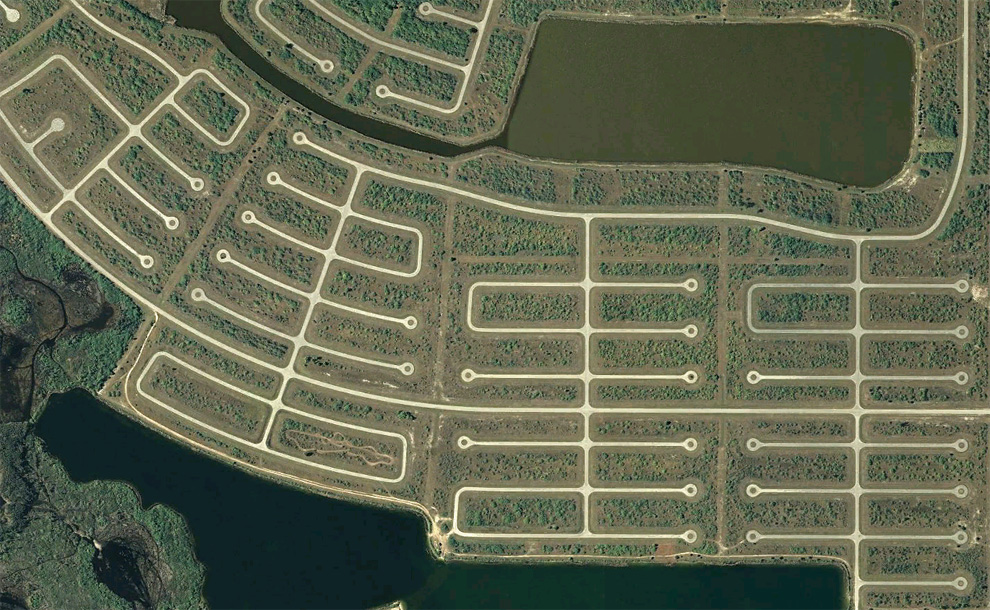
Manmade Landscapes

- Empty cul-de-sacs fill an area south of Rotonda West in Charlotte County, Florida.


- Oil fields in Saudi Arabia. Pictures from Google Earth.


Visited: R&S Boiler Room Session @ Pattern Cutters Warehouse

Pretty good.


Sunday, December 26, 2010

A Collection a Day


Everyone should collect something. But maybe a new collection for every day is a bit excessive?! - http://collectionaday2010.blogspot.com/


Digital Anthropology at UCL

http://www.ucl. ac.uk/anthropology/digital-anthropology/

The new MSc in Digital Anthropology- -begun in the Autumn of 2009–is well positioned for becoming a world leader in the training of researchers in the social and cultural dimensions of information technologies and digital media.

Digital technologies have become ubiquitous. From Facebook, Youtube and Flickr to PowerPoint, Google Earth and Second Life. Museum displays migrate to the internet, family communication in the Diaspora is dominated by new media, artists work with digital films and images.

Anthropology and ethnographic research is fundamental to understanding the local consequences of these innovations, and to create theories that help us acknowledge, understand and engage with them. Today’s students need to become proficient with digital technologies as research and communication tools. Through combining technical skills with appreciation of social effects, students will be trained for further research and involvement in this emergent world.

This MSc (…) brings together three key components in the study of digital culture:

1. Skills training in digital technologies, including our own Digital Lab, from internet and digital film editing to e-curation and digital ethnography.
2. Anthropological theories of virtualism, materiality/ immateriality and digitisation.
3. Understanding the consequences of digital culture through the ethnographic study of its social and regional impact and issues of the digital divide.


Started in 2009 but I've only just read about it. Sounds quite interesting and opportune. I'd be curious to know how the course is going.


Saturday, December 25, 2010

Tangible Music


Quite a nice project. Also featured in IDEO's "I miss my pencil" book. A very similar idea to Matt Brown's RFID Radio.

Friday, December 24, 2010

tight


Thursday, December 23, 2010

Water Sculpture


Art work by Shinichi Maruyama
Composited by Tetsushi Wakasugi

Tuesday, December 21, 2010

Ishihara


Yoav Brill has quite extreme colour blindness. He spent his chilldhood being unable to distinguish pink from gray, or even pick out a white flower in a sea of red ones. Brill made this film about his experience called Ishihara -- named after the instantly recognizable test patterns of colored dots that doctors use to diagnose colorblindness.

Saturday, December 18, 2010

Supposed to be researching Physiognomy...

Ended up reading -

How much do I want to know about my genes?

Large-scale studies such as the Avon Longitudinal Study of Parents and Children are playing a fundamental role in helping scientists to identify distinctions between the effects of genes and environment on our bodies and minds. Not only will this point the way to new treatments for disease, it will also illuminate the critical factors that determine who we are.

However, taking part in such studies exploring genetic risk factors for disease could have profound effects on our lives and identities. If the study identified that we had a high risk of a disease, such as breast cancer, but that there was no certainty we would actually get it, for example, would we want to know about the risk?

Would we want to live with the fear of something that may not happen? Would we take drastic preventative action, such as having both our breasts removed, to pre-empt the cancer occurring, even though such operations cannot remove all the tissue that is likely to become cancerous? What about the effects of such 'knowledge' on our sense of safety, our social relationships and life decisions such as whether to marry and have children?

http://www.wellcomecollection.org/whats-on/the-identity-project/more-identity-in-depth/how-much-do-i-want-to-know.aspx

Friday, December 10, 2010

Cold War-era building frozen in time.


The Palast der Republik, or Palace of the Republic, was new in 1976, but largely unloved after the Berlin Wall fell in 1989. Thorsten Klapsch became the last photographer to capture its interiors before a long period of demolition began. He has now published a book of his photographs.


Thursday, December 9, 2010

Audio / Visual. Amazing


Sculpture is an audiovisual performance duo from London – electronic music producer, Dan Hayhurst, and animator, Reuben Sutherland.
Sutherland ‘DJs’ with home-made zoetropic discs, intricate concentric rings of illustrated frames, projecting fragments of looping images at 33, 45 and 78 rpm – pre-Edisonian imaging technology combined with a digital video camera.
Rotary Signal Emitter - Side B from The Wire Magazine on Vimeo.
More info:
http://www.tapebox.co.uk/Tapebox/Home.html

NEWS - I have a bedroom! (No door yet though)

In fact all 6 bedrooms have now been built in Unit 6. Just a bit more painting and doors to attach. Our house is really starting to become a home!

The timber frame

With inner plaster board wall attached

Painting a finished room

The room, complete with belongings!

Games, games, games.

In the past few months I have become quite interested in and have been reading a lot about issues relating to gaming, how it's developing and how it's affecting our culture at the moment.
How gaming is being utilised as a tool to solve serious issues and problems and be of benefit to society but how in turn, with its increased involvement in our lives, it has also caused adverse behavior in some people.

Below is a link to BBC Panorama 'Addicted to Gaming".

At first I thought the panorama program was being a bit over the top and extremist but after seeing the interviews with people it seems that in some cases people are displaying all the traits of having an addiction - sometimes playing for more than 12 hours a day, neglecting important responsibilities, even failing to care for pets and children.

-----------------------------------------------------------------------------------------------------

In this photography project called Immersion by Robbie Cooper he takes pictures of people's faces while they are playing computer games. You can see by the emotions displayed on their faces how involved they get with playing the games.


The boy in the photo above cries while he is playing video games because he doesn't blink while playing, so not to miss anything.


Wednesday, December 1, 2010

More on Serious Gaming


Jane McGonigal’s TED talk on Serious Games.

(This video was the inspiration for the Serious Games Hot Topic event held by NESTA, which I have written about previously on this blog. I have also recently been reading 'Fans, Bloggers and Gamers - Exploring Participatory Culture' a book by Henry Jenkins which links well to this TED video. Both McGonigal and Jenkins talk a lot about utilising collective intelligence, via the internet, for solving bigger real world issues which I'm finding very interesting at the moment).

What if...


Labels