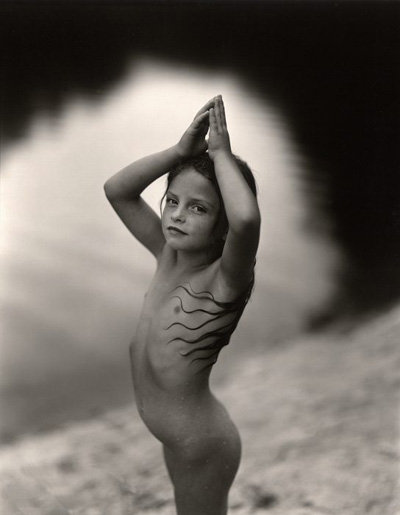

I went to see Sally Mann's exhibition at The Photographers' Gallery with my dad last summer but I was just reminded about her.
Her work is considered quite controversial by some but nevertheless the photographs are amazing.


London cabbies famously navigate one of the most complex cities in the world.
In 1999, neurologist Eleanor Maguire conducted MRI scans on their brains and compared them with the brain scans of others.
In contrast with non-cabbies, experienced taxi drivers had a greatly enlarged posterior hippocampus - that part of the brain that specialises in recalling spatial representations.
What's more, the size of cabbies' hippocampi correlated directly with each driver's experience: the longer the driving career, the larger the posterior hippocampus.
That showed that spatial tasks were actively changing cabbies' brains. This was perfectly consistent with studies of violinists, Braille readers, meditation practitioners, and recovering stroke victims.
Our brains adapt in response to the demands we put on them.
Read the whole article from BBC news here - http://www.bbc.co.uk/news/magazine-12140064
 1950's Hoover in Oxfam. The colour is awesome. Unfortunately it had already been sold.
While current electronic data storage methods approach their limits in density, the team achieved unprecedented results with a colony of E.coli. Their technique allows the equivalent of the United States Declaration of Independence to be stored in the DNA of eighteen bacterial cells. Given there are approximately ten million cells in one gram of biological material, the potential for data storage is huge. Furthermore, data can be encrypted using the natural process of site specific genetic recombination: information is scrambled by recombinase genes, whose actions are controlled by a transcription factor.
However, the technique is not yet perfect. Retrieval of data requires a sequencer, and is therefore tedious and expensive. Additionally, toxic DNA is bound to be present within the stored sequences. It is feared that organisms will mutate to remove such sequences, thereby deleting some of the data.
Consequently, the application of this technology is currently restricted to storing copyright information in genetically engineered organisms. Nevertheless, these results are encouraging. A bacterial medium has the potential to be more resilient than electronic methods of data storage. For example, the bacterium Deinococcus radiodurans is extremely radioresistant; the entrusted information would survive even under the electromagnetic pulse and radiation of nuclear fallout."
(A very interesting development in biotechnology. Also, one of the main problems with data storage is it can be damaged quite easily or simply becomes corrupted over time. As it says above this method has the potential to be far more resilient and therefore data can be preserved for much longer periods of time than previously possible)
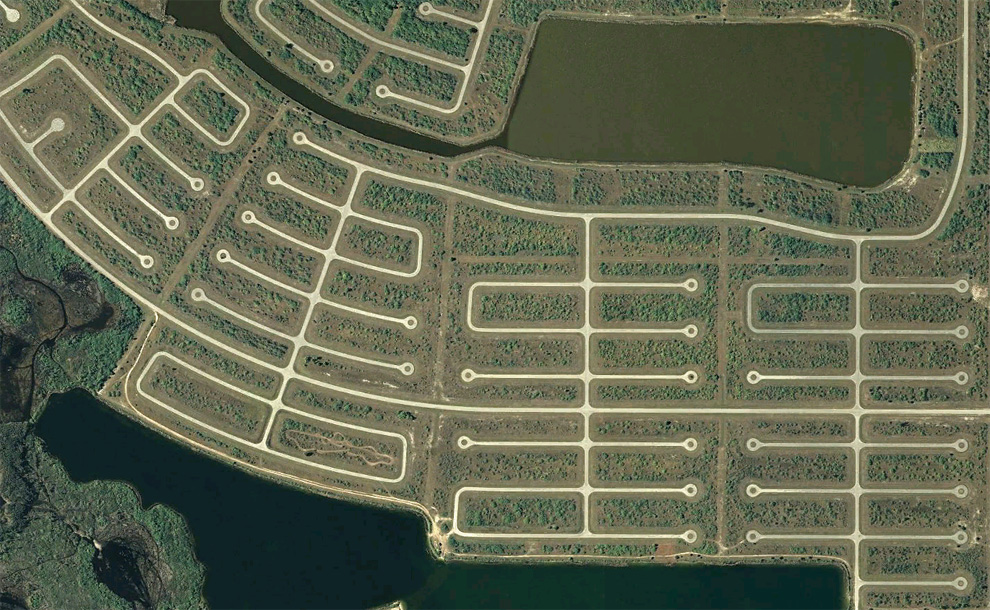 - Empty cul-de-sacs fill an area south of Rotonda West in Charlotte County, Florida.
 - Oil fields in Saudi Arabia. Pictures from Google Earth.

http://www.ucl. ac.uk/anthropology/digital-anthropology/
The new MSc in Digital Anthropology- -begun in the Autumn of 2009–is well positioned for becoming a world leader in the training of researchers in the social and cultural dimensions of information technologies and digital media.
Digital technologies have become ubiquitous. From Facebook, Youtube and Flickr to PowerPoint, Google Earth and Second Life. Museum displays migrate to the internet, family communication in the Diaspora is dominated by new media, artists work with digital films and images.
Anthropology and ethnographic research is fundamental to understanding the local consequences of these innovations, and to create theories that help us acknowledge, understand and engage with them. Today’s students need to become proficient with digital technologies as research and communication tools. Through combining technical skills with appreciation of social effects, students will be trained for further research and involvement in this emergent world.
This MSc (…) brings together three key components in the study of digital culture:
1. Skills training in digital technologies, including our own Digital Lab, from internet and digital film editing to e-curation and digital ethnography.
2. Anthropological theories of virtualism, materiality/ immateriality and digitisation.
3. Understanding the consequences of digital culture through the ethnographic study of its social and regional impact and issues of the digital divide.
Started in 2009 but I've only just read about it. Sounds quite interesting and opportune. I'd be curious to know how the course is going.
Ishihara - English version from Yoav Brill on Vimeo.
Large-scale studies such as the Avon Longitudinal Study of Parents and Children are playing a fundamental role in helping scientists to identify distinctions between the effects of genes and environment on our bodies and minds. Not only will this point the way to new treatments for disease, it will also illuminate the critical factors that determine who we are.
However, taking part in such studies exploring genetic risk factors for disease could have profound effects on our lives and identities. If the study identified that we had a high risk of a disease, such as breast cancer, but that there was no certainty we would actually get it, for example, would we want to know about the risk?
Would we want to live with the fear of something that may not happen? Would we take drastic preventative action, such as having both our breasts removed, to pre-empt the cancer occurring, even though such operations cannot remove all the tissue that is likely to become cancerous? What about the effects of such 'knowledge' on our sense of safety, our social relationships and life decisions such as whether to marry and have children?


Color a Sound from blair neal on Vimeo.
Heart Chamber Orchestra from pure on Vimeo.
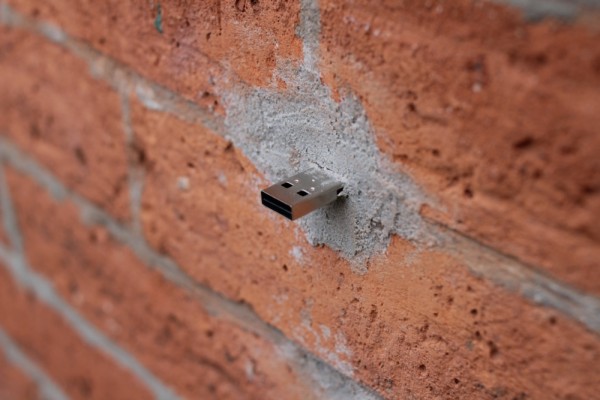
‘Dead Drops’ is an anonymous, offline, peer to peer file-sharing network in public space. USB flash drives are embedded into walls, buildings and curbs accessable to anybody in public space. Everyone is invited to drop or find files on a dead drop. Plug your laptop to a wall, house or pole to share your favorite files and data. Each dead drop is installed empty except a readme.txt file explaining the project. ‘Dead Drops’ is open to participation. If you want to install a dead drop in your city/neighborhood follow the ‘how to’ instructions and submit the location and pictures.
Berlin based media artist, Aram Bartholl started the ‘Dead Drops’ project during his stay in NYC at EYEBEAM as an artist in residence, October 2010.


